In 30 Seconds
Buying robot joint modules from China into Vietnam, Thailand, Malaysia or Singapore is straightforward once you know what to check: supplier credibility, 48V power and brownout resilience, realistic lead times, after-sales support, and customs classification. This guide walks through each — with the exact questions to ask a supplier before you order.
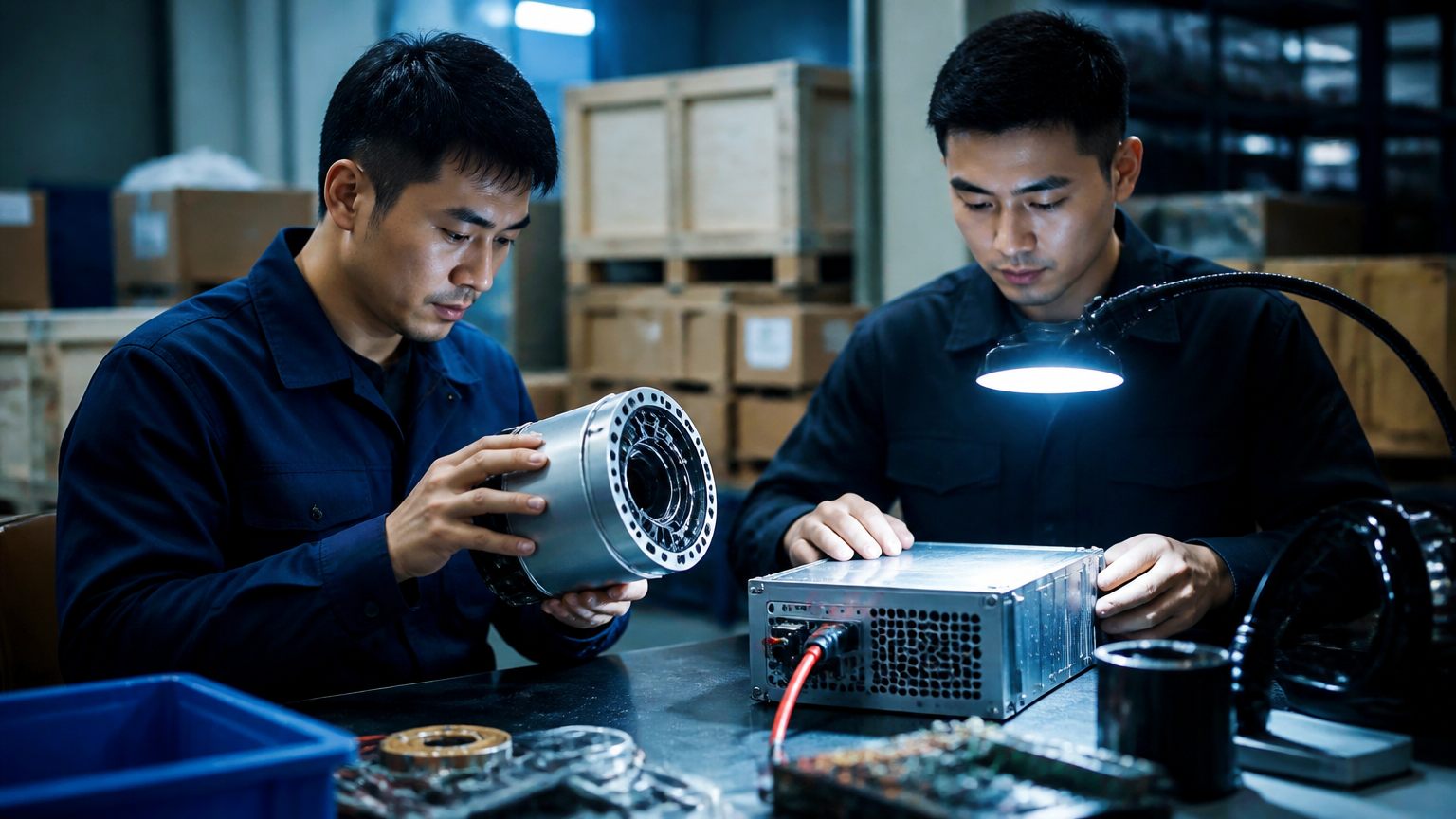
A documented incoming inspection turns a cross-border purchase into a predictable supply chain.
1. The Sourcing Landscape in Southeast Asia
Regional buyers have three channels for robot joint module suppliers: local distributors and system integrators (Singapore and Malaysia have the most established robotics distribution), direct-from-China procurement (growing fast as freight and payment rails improve), and regional trade shows where suppliers exhibit. Each has a trade-off:
| Channel | Pros | Cons |
|---|---|---|
| Local distributor / integrator | Local support, faster warranty handling, no import paperwork for you | Higher price, stock limited to what they carry |
| Direct from China manufacturer | Best price, full customization, direct engineering access | You own import/logistics; support is remote (email/WeChat/video) |
| Trade shows & agent offices | See hardware, meet engineering teams | Infrequent, limited selection |
For engineering-led teams, direct procurement plus a documented incoming inspection routine is the most cost-effective path — it is how most integrators in Vietnam and Thailand already buy automation components.
2. 48V Power: Why It Fits the Region
The PP-series runs on a single 48V DC bus, and that choice matters more in Southeast Asia than in most markets. Regional grids — especially outside capital cities — see voltage dips and brief outages that can trip 24V systems at the worst moment. A 48V architecture gives you:
- Brownout headroom: the same power at lower current means a 48V system tolerates deeper supply dips before undervoltage faults. Combined with a modest DC bus capacitor bank or a small UPS, a line can ride through the short dips that are routine in many industrial estates.
- Battery compatibility: 48V is the standard telecom/industrial battery voltage — plugging a mobile robot or AMR manipulator into an off-the-shelf 48V battery is trivial. See our battery-powered joints guide.
- Simpler distribution: one 48V rail to all axes, no per-joint converters, fewer failure points.
Supplier question to ask: "What is the input voltage range and undervoltage protection behavior?" — a real spec answer (e.g., 36–60V DC input window) beats a vague "48V standard."
3. Lead Times, Freight and Packaging
Plan the logistics before you place the order:
- Production lead time: catalog modules typically ship in 1–2 weeks; customized configurations (special ratio, brake, cabling) add time. Confirm the lead time in writing before paying.
- Air vs sea: air freight from China to Bangkok, Hanoi, Kuala Lumpur or Singapore is 3–7 days door-to-door; sea freight is 1–4 weeks depending on the port. For prototypes and first builds, air is usually worth it.
- Packaging: modules ship in anti-static, moisture-protected packaging — verify the supplier seals against humidity for sea freight (relevant in tropical climates; see our tropical climate guide).
- Spares: order one spare joint per arm configuration from the start. The cost of downtime waiting for a cross-border replacement almost always exceeds the spare's price.
4. After-Sales Support: What to Demand
Cross-border support quality varies enormously, so pin it down in writing:
- Warranty terms: PlaPivot offers a standard 12-month warranty (24-month extended option) with replacement units shipped within 5 business days for valid claims — that clause is the one that matters.
- Technical documentation: datasheets, wiring diagrams, CAD models and a controller setup guide (like ours) let your team self-serve instead of waiting on time-zone support.
- Firmware and config support: confirm the supplier provides the drive software and configuration files, not just hardware.
- Language: English engineering support is a must; ask which channels (email, video call) are covered.
5. Customs and Import Duties in ASEAN
Robot joint modules are electromechanical components, typically classified under HS Chapter 84/85 — often 8479 (machines having individual functions) or 8483/8501 depending on the exact build — with duties and taxes varying by country. Practical notes:
- Get the HS code from your supplier and verify it with your customs broker — misclassification is the most common import delay.
- ASEAN trade agreements: many components attract lower duty under ATIGA or bilateral FTAs when moving between ASEAN members; confirm your certificate-of-origin requirements.
- Value threshold: low-value shipments may qualify for simplified clearance in several countries; brokers can advise the threshold.
- VAT/GST: budget for local consumption tax on import in addition to duty.
Our general importing guide covers the end-to-end process in more depth.
6. Pre-Order Checklist
| Item | What to Verify |
|---|---|
| Specs | Torque, speed, ratio, backlash, encoders match your joint map |
| Voltage window | 48V input range and undervoltage behavior documented |
| Communication | EtherCAT/CANopen support with setup files included |
| Lead time | In writing, for your exact configuration |
| Documentation | Datasheet, CAD, wiring diagram, QC report per serial |
| Warranty | Duration + replacement turnaround clause |
| HS code & origin | Confirmed with broker; certificate of origin if claiming FTA |
Buying from China into Southeast Asia?
Request the datasheet, HS code reference and shipping options — our team responds within 24 hours, no minimum order.
Request Quote & Shipping Info