In 30 Seconds
A joint module rated for a temperate factory can fail within a year in a tropical one. Condensation, corrosion and seal degradation are the three killers in Southeast Asian environments — and they are all addressable at specification time. This guide covers what an IP rating really guarantees, how to choose a corrosion-resistant robot actuator for Southeast Asia, and how to manage heat and humidity in everyday operation.
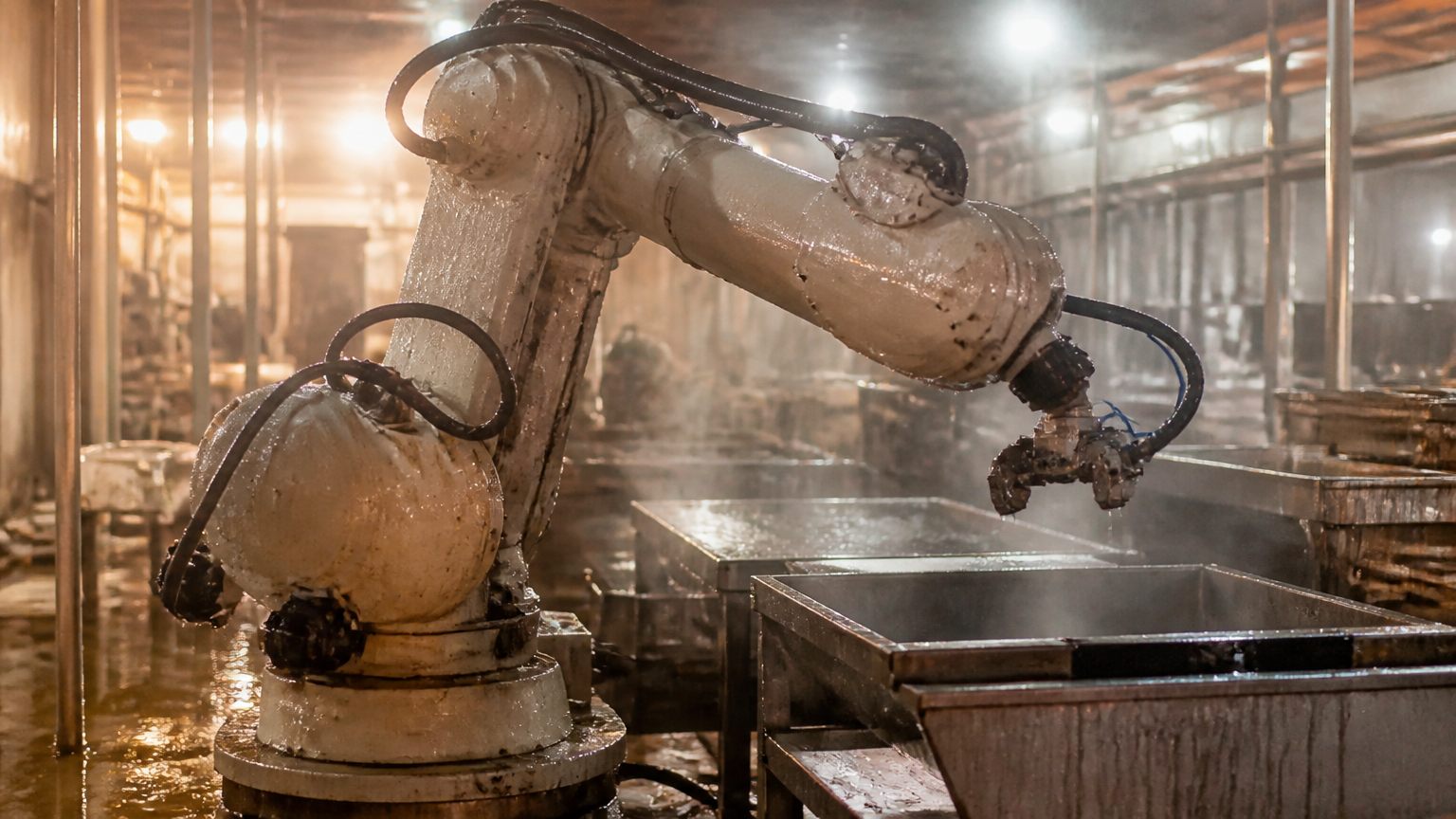
Humidity, splash and thermal cycling are the everyday reality of tropical factory floors.
1. What Actually Breaks in a Tropical Climate
Southeast Asian plants — from Bangkok electronics assembly to Jakarta food processing — operate at 30–35 °C with 70–90% relative humidity for most of the year, punctuated by monsoon season. Three failure mechanisms dominate:
- Condensation: when a cool joint meets warm humid air, water condenses on internal surfaces. Over months this finds its way past seals and connectors, corroding encoder boards and motor windings.
- Corrosion: humid air + salt or process chemicals accelerates corrosion of bearing races, flange surfaces and fasteners — the classic cause of "joint got stiff" complaints.
- Lubricant degradation: heat thins and ages grease faster, reducing the harmonic drive's rated life if the duty cycle is not derated.
2. Understanding IP Ratings: IP54 vs IP65
The IP rating of a robot joint module is the first line of defense, and the numbers are frequently misunderstood:
| Rating | Solids | Liquids | Good For |
|---|---|---|---|
| IP54 | Dust protected (not fully sealed) | Splash-proof, all directions | Standard indoor factories, light dust, occasional splash |
| IP65 | Dust-tight | Water jets from any direction | Washdown areas, high humidity, dusty outdoor-adjacent lines |
| IP66/IP67 | Dust-tight | Powerful jets / immersion | Food processing washdown (typically full-arm systems) |
In the PP-series, IP54 is standard across the lineup and the PP-170P carries IP65 for the heaviest-duty, most exposed positions. For a deeper read on sealing, see our IP65 joint module guide.
3. Corrosion-Resistant Actuator Selection for Southeast Asia
A corrosion-resistant robot actuator for Southeast Asia is not only about the IP number — surface treatment and material choice matter just as much:
- Hard-coat anodized aluminum housings: the anodized layer is far more corrosion-resistant than bare or painted aluminum. All PP-series housings are hard-coat anodized.
- Stainless or coated fasteners: check the bolt material if the line sees splash or salt air (coastal plants in Malaysia and Vietnam especially).
- Sealed connectors: water entry usually happens at the cable connector, not the housing. The PP-series integrated connector is sealed and keyed.
- Internal lubrication in a closed cup: the harmonic drive flexspline keeps grease inside the gear mesh, so humid air never directly contacts the working lubricant.
4. Condensation Management in High-Humidity Factories
Even with good sealing, industrial robot condensation is a management problem as much as a hardware problem. Proven practices for high-humidity factories:
- Keep the robot powered: a warm joint at 40–45 °C internal temperature condenses far less than a cold one. Idle time is the most condensation-prone time.
- Minimize thermal cycling: shutdowns on hot humid nights are the worst case — the joint cools below dew point. Prefer keeping lines running or powering joints before the hall cools.
- Dry the environment where possible: dehumidifiers at the line level, or air-conditioned robot cells, pay for themselves in actuator life.
- Schedule seal inspection: tropical duty warrants a monthly visual seal check, not the annual check used in temperate plants.
Our maintenance guide has the full inspection checklist; in humid climates, move the "seal and connector" items to the monthly column.
5. Heat, Duty Cycle and Derating
The PP-series is rated for operation from −20 °C to +40 °C ambient. At the top of that range, expect thermal derating: the continuous torque envelope shrinks because the housing cannot shed heat as fast. Two practical rules for tropical lines:
- Size with 30% headroom, not 20%, when ambient is above 32 °C — the extra margin absorbs derating without tripping the driver.
- Watch the duty cycle: a 100% duty cycle at rated torque is not realistic at 38 °C. Use the module's thermal data to pick a realistic intermittent profile.
6. Application-Specific Notes
| Application | Climate Stress | Joint Spec Priority |
|---|---|---|
| Food & beverage processing (Thailand, Indonesia, Vietnam) | Splash, washdown chemicals, high humidity | IP65 option, sealed connectors, hard-coat surfaces |
| Electronics assembly (Malaysia, Singapore, Philippines) | Air-conditioned but high RH swings | Sealed housings, ESD-safe grounding, no-homing encoders |
| Palm oil / agro-processing | Dust + humidity + heat | Dust-tight sealing, corrosion-resistant surfaces |
| Warehouse & logistics (no AC) | Heat, dust, humidity cycling | IP54 minimum, thermal derating margin |
7. The Specification Checklist
- ☐ IP54 as a floor; IP65 for washdown or coastal sites
- ☐ Hard-coat anodized or equivalent corrosion-resistant surfaces
- ☐ Sealed, keyed connectors
- ☐ Operating range covering −20 °C to +40 °C (or better)
- ☐ 30% torque headroom for thermal derating
- ☐ Monthly seal/connector inspection in the maintenance plan
- ☐ Keep joints powered during idle periods to prevent condensation
Deploying in a Tropical Factory?
Tell us your environment — humidity, splash, temperature — and we'll confirm the right sealing options and duty ratings within 24 hours.
Request Quote & Datasheet