A robot is only as reliable as its weakest joint. Regular maintenance of robot joint modules is essential to ensure long-term precision, prevent costly downtime, and extend the operational lifespan of the system. This guide covers the critical steps for inspecting and lubricating integrated actuators.
The Importance of Proactive Maintenance
Robot joint modules are highly integrated systems containing precision gears, high-speed motors, and sensitive electronics. In industrial environments, these components are often subjected to continuous operation, varying loads, and harsh conditions. Proactive maintenance—performing scheduled checks regardless of current performance—is the best way to catch minor issues before they lead to catastrophic failure. A well-maintained joint module can last for tens of thousands of hours, whereas a neglected one may fail prematurely due to gear wear, bearing seizure, or electrical overheating. The goal of a maintenance program is to maintain the original factory specifications for backlash, torque, and positioning accuracy.
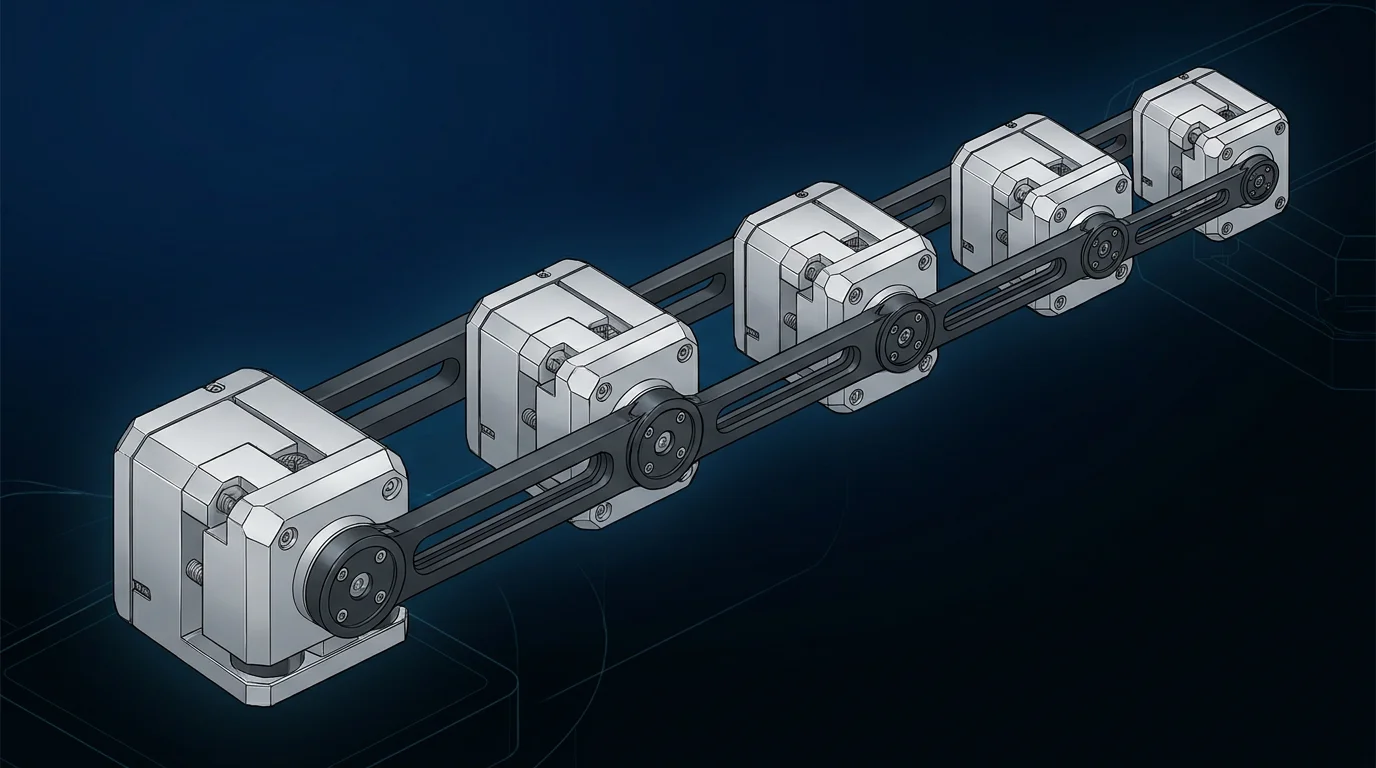
Technical illustration for Robot Joint Module Maintenance: Inspection, Lubrication and Lifespan.
Visual and Audible Inspection Routines
The first line of defense is a simple visual and audible inspection. Technicians should regularly check the exterior of the joint for signs of oil leakage, which could indicate a failing seal. For modules using harmonic drives, a small amount of grease migration is normal, but excessive leakage is a red flag. Listen closely to the joints during operation; any unusual grinding, clicking, or high-pitched whining often points to gear wear or lack of lubrication. Additionally, check all mounting bolts and electrical connectors for tightness. Vibrations during high-speed movements can gradually loosen hardware, leading to misalignment or intermittent communication errors.
Lubrication: The Lifeblood of Precision Gears
Lubrication is the most critical factor in the lifespan of a robot joint's gearbox, especially for strain wave gears (harmonic drives) and cycloidal drives. These gears rely on a thin film of specialized grease to reduce friction and dissipate heat. Over time, the grease can break down or become contaminated with microscopic wear particles. Depending on the duty cycle, grease should typically be replaced or replenished every 2,000 to 5,000 hours of operation. It is vital to use the specific grease recommended by the manufacturer (such as Harmonic Drive's SK-1A or SK-2 grease), as generic lubricants may not have the necessary extreme-pressure additives or temperature stability, leading to rapid gear degradation.
Technical illustration for Robot Joint Module Maintenance: Inspection, Lubrication and Lifespan.
Monitoring Electrical Health and Encoder Integrity
Maintenance isn't just about the mechanical parts; the electrical components need attention too. Use diagnostic software to monitor the motor's temperature and current draw during standard cycles. An upward trend in current consumption for the same load often indicates increasing internal friction, signaling that mechanical maintenance is overdue. Check the encoder's signal quality if the module supports it. Dust or moisture ingress can sometimes affect optical encoders, while magnetic encoders are generally more robust. Ensuring that the internal controller's firmware is up to date can also prevent software-related glitches and improve overall system stability.
Determining Remaining Useful Life (RUL)
Understanding the lifespan of a joint module helps in planning for eventual replacements. Most manufacturers provide an 'L10' life rating for their bearings and gears, which is a statistical estimate of when 10% of units will fail under specific loads. By tracking the total number of cycles and the average load applied to each joint, you can estimate the Remaining Useful Life. For critical applications, consider using vibration analysis or 'digital twin' monitoring to detect subtle changes in the joint's dynamic response. When a joint nears the end of its life, it may exhibit increased backlash or a drop in repeatability. Replacing the module during a planned shutdown is always more cost-effective than dealing with an emergency failure on a production line.
Ready to start your build?
Our engineering team is ready to help you select the perfect robot joint modules for your application. Get expert advice and a custom quotation within 24 hours.
Get a Quote & DatasheetRelated articles you might find useful: