The robotics industry is evolving at breakneck speed, and the joint module—the literal 'muscle' of the robot—is at the center of this transformation. As we look through 2025, several key trends are emerging that will define how robots are built and deployed for the next decade.
The Rise of Humanoid-Optimized Actuators
2025 has been the 'Year of the Humanoid.' With companies like Tesla, Figure, and Unitree pushing humanoid robots toward commercialization, the demand for specialized joint modules has skyrocketed. Unlike industrial arms that prioritize rigid precision, humanoid joints require high power density, impact resistance, and 'back-drivability.' We are seeing a shift toward quasi-direct drive (QDD) actuators and high-torque-density motors that allow robots to move more naturally and safely around humans. These modules are being designed specifically for the unique kinematics of hips, knees, and ankles, where the ability to absorb shocks from walking is just as important as the ability to move the limb.
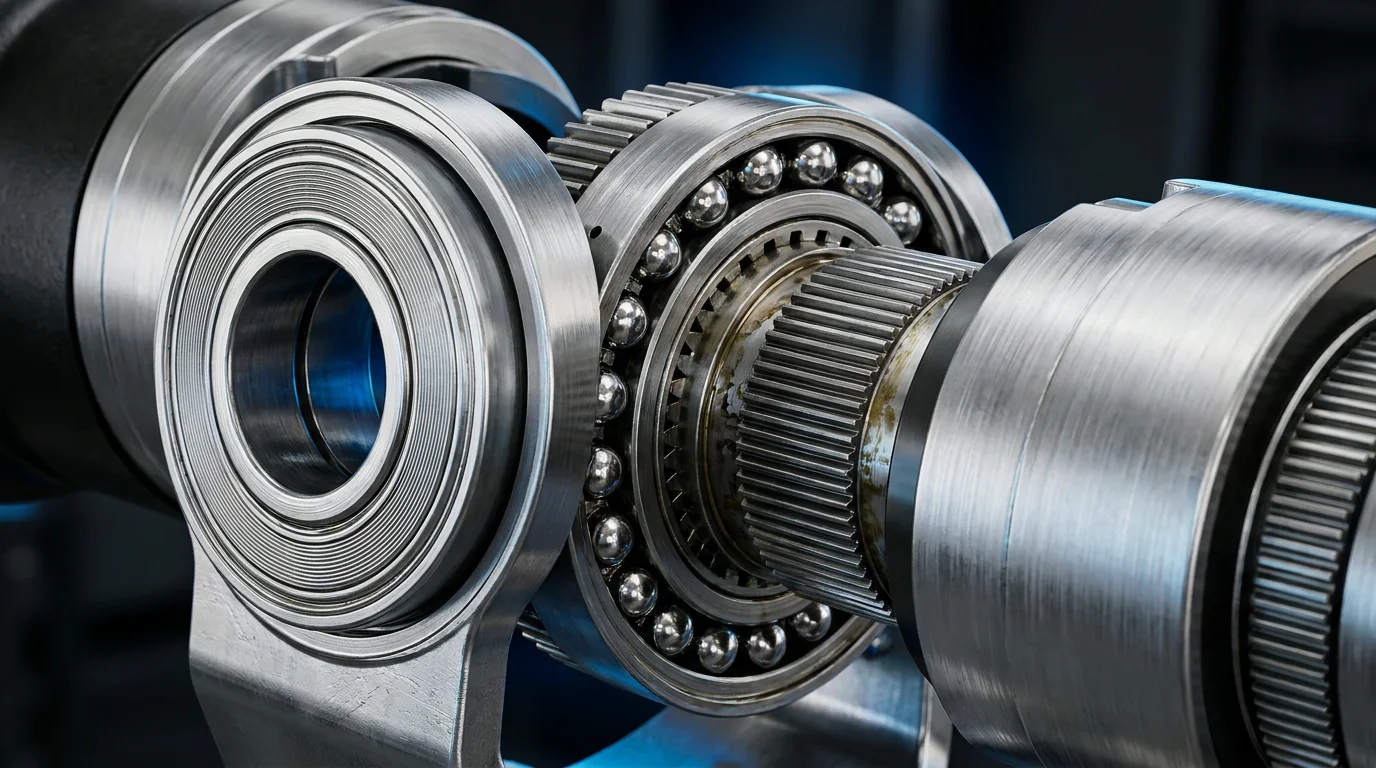
Technical illustration for Robot Joint Module Market Trends: What 2025 Tells Us About the Future.
Integration of 'Edge AI' at the Joint Level
The intelligence of the robot is moving from the central processor down to the individual joints. Modern joint modules in 2025 are increasingly equipped with powerful microcontrollers capable of running 'Edge AI' algorithms. This allows the joint to perform real-time vibration suppression, predictive maintenance (detecting wear patterns before failure), and even local collision detection. By processing sensor data locally at the source, the joint can react to environmental changes in microseconds, far faster than waiting for a command from a central controller. This 'smart joint' trend is making robots more responsive, safer, and easier to program.
Standardization and the 'Commoditization' of Actuators
For years, high-performance robot joints were expensive, niche components. In 2025, we are seeing a clear trend toward standardization. Increased competition, particularly from manufacturers in Asia, has driven down prices while maintaining high quality. Standardized form factors and communication protocols (like EtherCAT over FSoE) are becoming the norm, allowing robot builders to mix and match modules from different suppliers. This commoditization is lowering the barrier to entry for startups and educational institutions, leading to a surge in specialized robotic applications that were previously too expensive to develop.
Technical illustration for Robot Joint Module Market Trends: What 2025 Tells Us About the Future.
Enhanced Energy Efficiency for Mobile Robotics
As mobile robots (AGVs, AMRs, and humanoids) become more prevalent, energy efficiency has become a top priority. Every watt saved in the joint modules translates to longer battery life and increased operational range. In 2025, there is a strong focus on low-loss gearboxes and high-efficiency motor drivers. Regenerative braking—where the energy from decelerating a limb is captured and fed back into the battery—is becoming a standard feature in high-end modules. Thermal management has also improved, with new materials and designs that allow joints to operate at peak performance for longer without overheating, even in compact, uncooled housings.
The Move Toward Single-Cable Solutions
Simplifying the 'nervous system' of the robot is a major trend. Traditional robots required separate cables for power, encoder feedback, and communication for each joint. In 2025, single-cable technology has become the industry standard for new designs. These hybrid cables combine power and high-speed data in a single jacket, drastically reducing the complexity of cable routing through robot arms. This not only makes the robots more reliable (fewer connectors to fail) but also enables sleeker, more compact designs for collaborative robots and medical devices. The reduction in wiring weight is particularly beneficial for high-speed delta robots and lightweight arms.
Ready to start your build?
Our engineering team is ready to help you select the perfect robot joint modules for your application. Get expert advice and a custom quotation within 24 hours.
Get a Quote & DatasheetRelated articles you might find useful: