In the operating room, precision is a matter of life and death. Surgical robotics demand a level of accuracy, smoothness, and reliability that far exceeds standard industrial requirements. High-performance joint modules are the core technology making minimally invasive surgery and robotic-assisted procedures possible.
Unmatched Precision and Zero Backlash
Surgical robots, such as those used for laparoscopy or orthopedic procedures, require sub-millimeter precision. To achieve this, the joint modules must exhibit zero or near-zero backlash. This is why harmonic drives (strain wave gears) are almost universally used in medical robotics. Their unique gearing mechanism allows for extremely high reduction ratios in a compact footprint with virtually no 'play' in the motion. This ensures that when a surgeon moves a master controller by a fraction of a millimeter, the robotic instrument at the distal end mimics that movement exactly, without any shudder or lag. Furthermore, high-resolution absolute encoders (often 19-bit or higher) are used to provide precise feedback of the joint's position at all times.
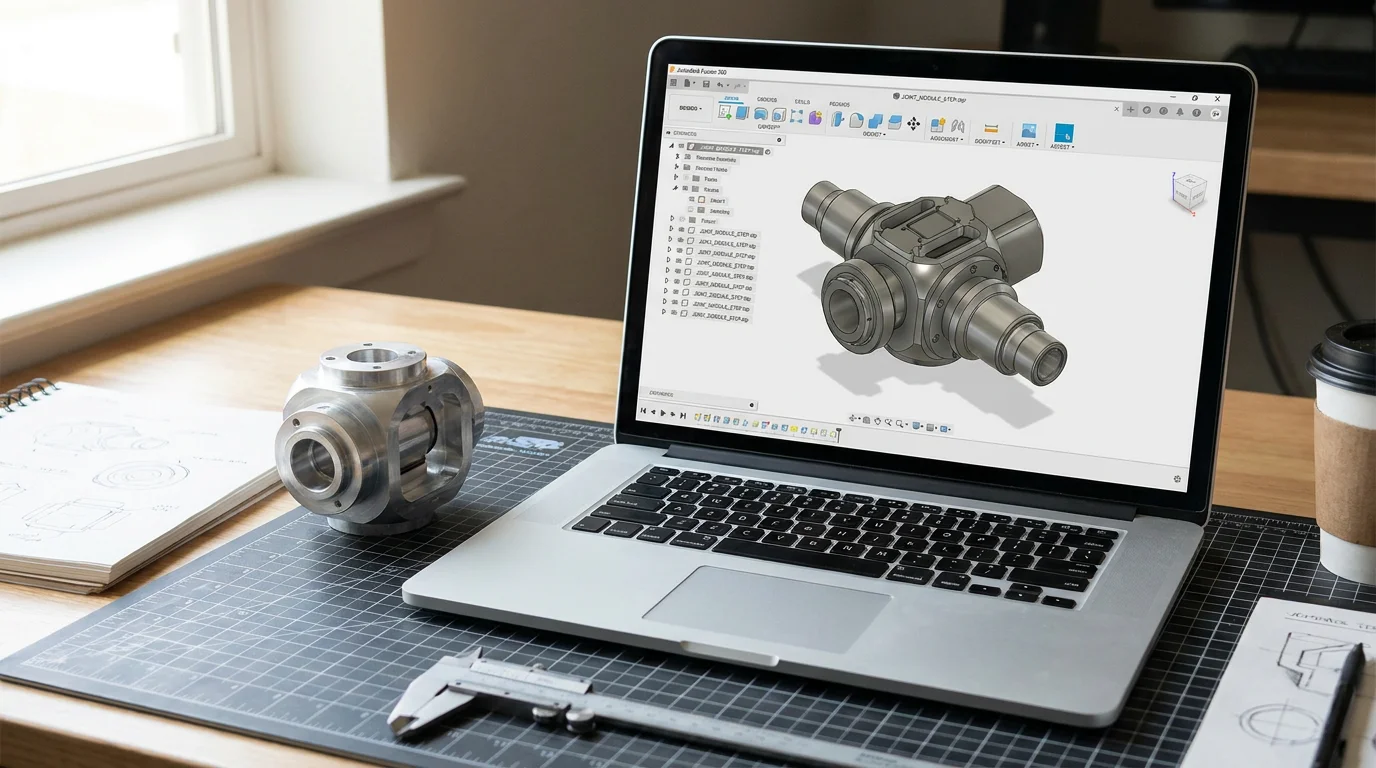
Technical illustration for Precision Joint Modules for Surgical Robotics and Medical Devices.
Smoothness of Motion and Haptic Feedback
Beyond simple accuracy, surgical joints must move with exceptional smoothness. Any 'cogging' or torque ripple from the motor can be felt by the surgeon through haptic feedback systems, potentially distracting them or causing fatigue. High-quality surgical actuators use specialized motor designs with low cogging torque and sophisticated drive algorithms to ensure perfectly fluid motion. This smoothness is critical for tasks like suturing or delicate tissue manipulation, where the robot must act as a transparent extension of the surgeon's hand. Advanced joint modules also incorporate torque sensors to provide the 'sense of touch' back to the operator, allowing them to feel the resistance of the tissue they are working on.
Biocompatibility and Sterilization Challenges
The medical environment imposes unique physical constraints on robot joints. Many surgical components must be capable of withstanding sterilization processes, such as autoclaving (high-pressure steam) or chemical washdowns with hydrogen peroxide. While the joint modules themselves are often located inside the robot's structure or covered by sterile drapes, they must still be designed with materials that don't outgas and can operate reliably in a cleanroom environment. Sealing is paramount; IP65 or even IP67 ratings are common to prevent any lubricants from leaking out and to stop cleaning fluids from getting in. Using medical-grade lubricants and stainless steel components helps ensure long-term biocompatibility and corrosion resistance.
Technical illustration for Precision Joint Modules for Surgical Robotics and Medical Devices.
Safety and Redundancy Systems
In surgical robotics, safety is the primary design driver. Joint modules for medical applications often include redundant sensors—dual encoders for every joint to cross-check position and detect any discrepancies immediately. Mechanical brakes are also a standard feature; in the event of a power failure or emergency stop, the brakes must engage instantly to lock the robot in place, preventing any unintended movement that could harm the patient. The software driving these modules runs on real-time operating systems with strict 'fail-safe' protocols. If the system detects an over-current condition or a deviation from the commanded path, it will safely halt all motion in milliseconds.
Miniaturization: The Future of Surgical Joints
The trend in surgery is moving toward even less invasive procedures, which requires smaller robotic tools. This, in turn, drives the demand for miniaturized joint modules. Engineers are now developing actuators as small as 20mm in diameter that still deliver significant torque and maintain high precision. These tiny joints enable the creation of snake-like robots that can navigate through natural orifices or small incisions to reach deep within the body. Integrating the motor, gearbox, and electronics into such a small volume requires cutting-edge manufacturing techniques and advanced thermal management, as heat dissipation becomes more challenging at smaller scales. The evolution of these micro-actuators is set to unlock the next generation of robotic surgery.
Ready to start your build?
Our engineering team is ready to help you select the perfect robot joint modules for your application. Get expert advice and a custom quotation within 24 hours.
Get a Quote & DatasheetRelated articles you might find useful: