In 30 Seconds
"Labor is cheap, why automate?" is the question every Southeast Asian SME asks — and the answer is changing fast. Wages are rising 5–10% a year in key hubs, quality and shift-coverage pressure is real, and modular components like joint modules have made robot arms dramatically cheaper to build. This guide walks through the payback period math, a worked example, and the government incentives that shorten it.
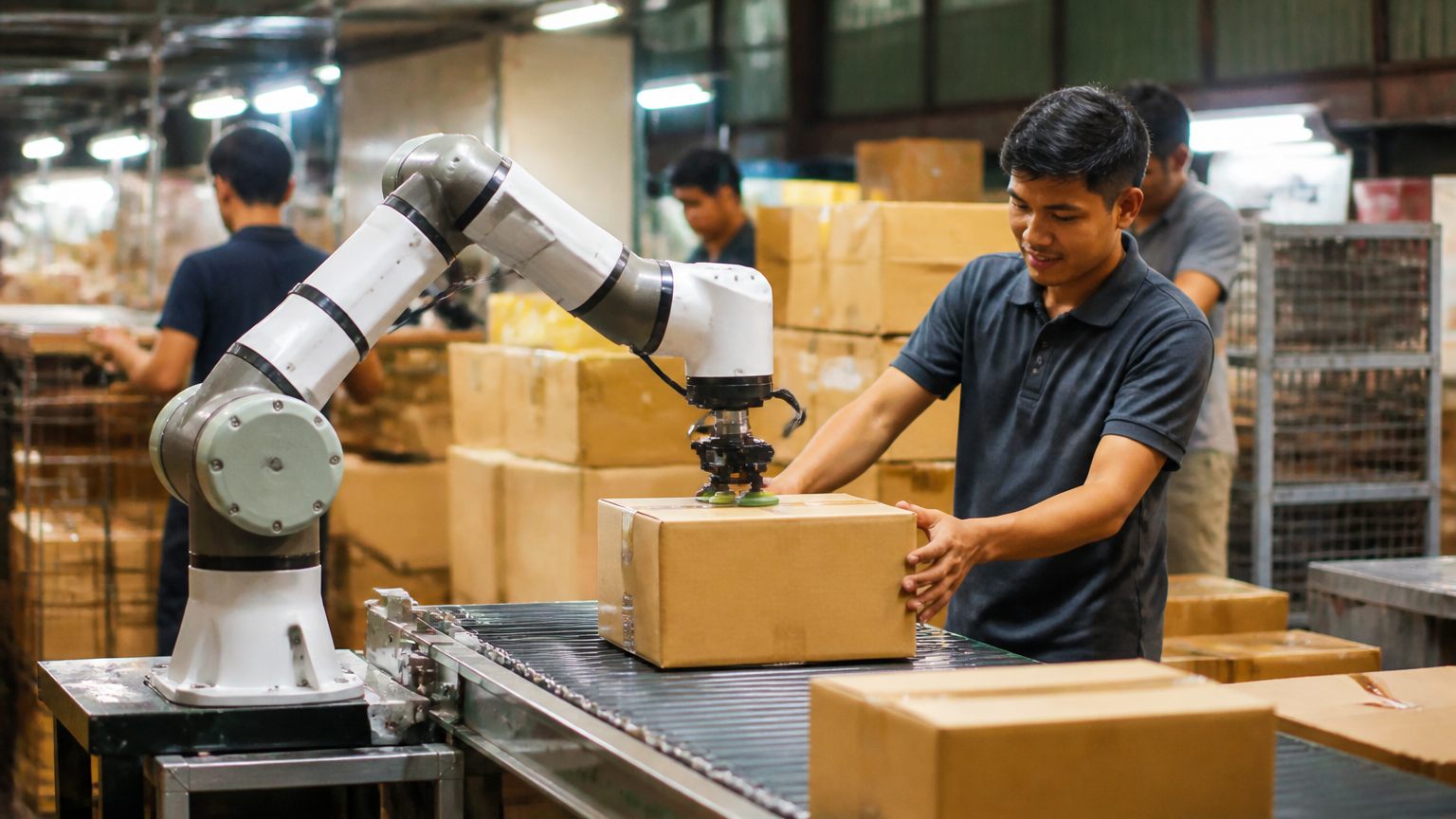
Cobots and small arms are entering Southeast Asian factories at record rates — the math increasingly favors them.
1. The Changing Labor Math
Minimum wages in Thailand, Vietnam, Indonesia and the Philippines have risen steadily for a decade, and the effective cost per worker — including social contributions, overtime and turnover — is far above the headline minimum. At the same time, the total installed cost of a small robot arm has fallen by half or more over the same period, largely because standardized robot arm automation components replaced bespoke engineering.
The threshold where automation pays off has moved from "high-wage countries only" into the Southeast Asian mainstream. The deciding factor is no longer whether you can afford a robot, but how fast it pays back.
2. The Payback Formula
Use the standard payback calculation that integrators apply across the region:
Payback period (months) = Total system investment ÷ (Monthly labor saving + monthly output/quality gains − monthly running costs)
Where the components are:
- Total investment: arm + tooling + cell + integration (or your in-house build cost)
- Monthly labor saving: workers removed × fully-loaded monthly cost per worker
- Output/quality gains: extra shifts, fewer defects, less rework
- Running costs: power, maintenance, consumables, operator training
Our joint module cost breakdown helps you estimate the investment side honestly.
3. Worked Example: A Two-Shift Packing Station
Concrete numbers make the framework real. This example uses deliberately conservative assumptions — replace them with your own figures:
| Item | Value |
|---|---|
| Workers replaced (2 shifts) | 3 operators (2 per shift + 1 partially) |
| Fully-loaded monthly cost per operator | $400 (typical mid-tier SEA factory, all-in) |
| Monthly labor saving | $1,200 |
| In-house 4-axis arm build (6× PP-series joints + frame + control) | $4,500–$7,000 |
| or full system integration by an integrator | $10,000–$18,000 |
| Running cost (power + maintenance) | $80/month |
| Payback (in-house build) | ~4–6 months |
| Payback (integrated system) | ~9–16 months |
Most regional integrators quote 12–18 months as a "good" payback for SMEs — anything under 12 months is an easy internal sell. An in-house build using catalog joint modules lands well under that bar.
4. Low-Cost Joint Modules and the Build-Your-Own Path
The most disruptive change for Southeast Asian SMEs is the low cost robot joint module: a complete harmonic-drive actuator with integrated driver, absolute encoders and EtherCAT/CANopen for the price that a bare motor + gearbox cost a few years ago. That changes the options:
- Build your own arm: a 4-axis picking or packing arm from PP-series modules is a realistic weekend-to-month project for a competent local engineering team — no motor-driver-gearbox integration required.
- Battery-powered carts and AMR manipulators: 48 V DC modules run directly from the same battery as the platform.
- Test before committing: buy one module, build a single-axis test rig, validate the concept before scaling to a full arm.
Starting small is also the smart way to manage risk — our small-batch customization guide explains how to get exactly the configuration you need without a big minimum order.
5. Government Incentives Across the Region
Manufacturing automation incentives in Southeast Asia are real and frequently underused by SMEs:
| Country | Program (examples) | What It Offers |
|---|---|---|
| Thailand | BOI investment promotion, automation & robotics promotion | Corporate tax holidays/exemptions for promoted automation projects |
| Vietnam | Support policies for supporting industries & automation adoption | Preferential credit and tax support for eligible manufacturers |
| Malaysia | Industry4WRD, MIDA incentives | Grants and tax allowances for Industry 4.0 adoption |
| Singapore | Productivity Solutions Grant (PSG), EDG | Co-funding for automation equipment (often 30–70% co-pay) |
| Indonesia | Making Indonesia 4.0 programs | Support for industrial transformation projects |
Programs change frequently — verify current terms with the local agency or a consultant before budgeting. A grant or tax exemption can shorten an already-fast payback by several months.
6. When NOT to Automate (Yet)
Honest advice: if the task is highly variable, the product changes weekly, or volumes are too low to run the cell most of the day, wait. Automation pays when the task is repeatable and the cell utilization is high. Start with the 80/20: pick the most repetitive, highest-turnover station — packing, screwing, palletizing, simple assembly — and automate that one first.
7. First Steps This Week
- List your 3 most repetitive stations and count operator-hours per week
- Run the payback formula with fully-loaded costs, not minimum wage
- Check current incentive programs in your country
- Request joint module datasheets and CAD models to start the design
Building a Budget Automation Cell?
Send us your task, cycle time and budget — we'll recommend a joint map that fits, with no minimum order.
Request Quote & Datasheet