The Problem
Most robot joint module manufacturers set minimum order quantities (MOQ) of 50–100 units. For robotics startups, university labs, and small system integrators needing just 6–12 actuators for a single cobot prototype, this is a dead end. Here's how to find a small batch robot actuator supplier that actually wants your business — and what kind of customization you can reasonably expect.
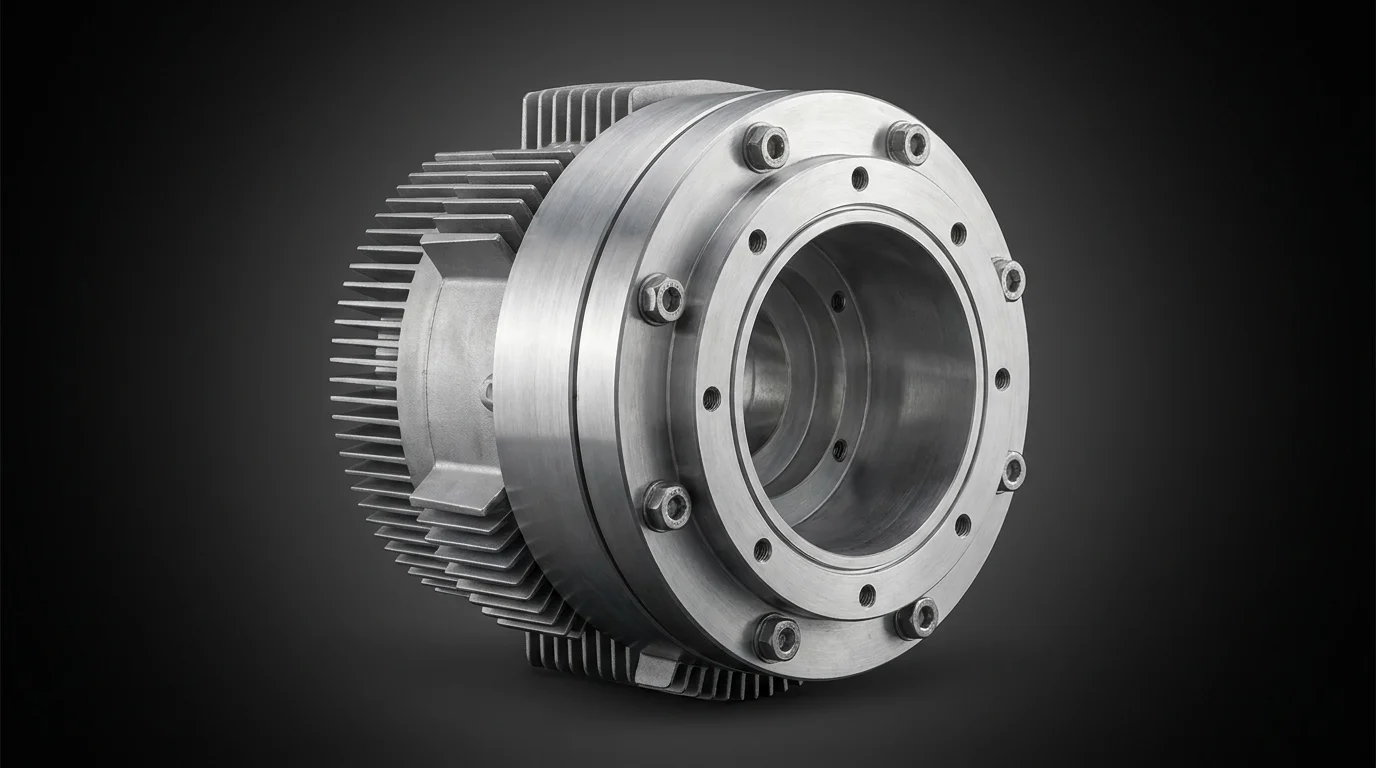
Startups and research labs don't need thousands of units — they need the right six modules, fast.
1. The MOQ Problem in the Robot Actuator Industry
The robotic actuator module supply chain is optimized for large OEMs. Harmonic drive reducers, frameless motors, and precision encoders each have their own minimum order quantities. When a manufacturer integrates these into a servo joint module, they often pass the aggregated MOQ downstream — which is why you'll hear 50, 100, or even 500-unit minimums from large suppliers.
But the landscape is shifting. A new generation of robot joint module factory operations in China — including PlaPivot — has emerged specifically to serve the long tail: companies that need low MOQ robot joint module supply with short lead times and responsive engineering support.
Who Needs Small Batch Supply?
- Robotics Startups: Building the first 3–5 prototypes of a new cobot design. Need 6–12 joints per unit. Can't tie up $50,000+ in inventory before Series A closes.
- University & Research Labs: Budget-constrained, need 1–2 units for a PhD project or a bipedal robot research platform. Grant cycles don't align with 12-week lead times.
- Small System Integrators: Building custom robotic cells for a single client. Need 2–4 joints with specific torque/speed characteristics. MOQ of 50 = project dead.
- Industry 4.0 Pilot Projects: Large companies experimenting with automation. They want to test 2–3 robot arms before committing to a factory-wide deployment.
The Small Batch Sweet Spot
| Order Size | Typical Supplier Response | With a Small-Batch Supplier |
|---|---|---|
| 1–5 units | "Not possible / $500 surcharge per unit" | Standard order, ships in 3–7 days |
| 6–20 units | "We can try, lead time 6–8 weeks" | Volume discount starts, 5–10 day ship |
| 20–50 units | Reluctant yes, internal approval needed | OEM/ODM customization available |
| 50–200 units | Standard order accepted | Custom firmware, labeling, full ODM |
2. What Customizations Are Realistic for Small Batches?
A common misconception: "custom" means designing a new joint from scratch. In practice, a customizable robot joint module supplier offers tiered customization — and the most valuable modifications are surprisingly accessible even at low volumes.
Tier 1: No-Cost Standard Customizations (Any Order Size)
- Communication protocol selection: Choose EtherCAT or CANopen per unit. PlaPivot supports both on all PP-series modules — no firmware charge.
- Cable length & connector type: Specify cable length (0.3m–5m) and connector style (M12, M23, custom pinout).
- Mounting flange adaptation: We provide STEP files; you design the bracket. No modification to the module needed.
- Torque-speed profile selection: Pre-configured firmware profiles for "high speed / lower torque" or "high torque / lower speed" within the module's envelope.
Tier 2: Moderate Customizations (20+ Units)
- Custom firmware: Modified control loop parameters, custom homing sequences, or non-standard CiA 402 profiles.
- Branded labeling: Your company logo on the housing, custom packaging with your SKU codes.
- Alternative encoder resolution: 19-bit, 23-bit, or 25-bit absolute encoders to match your precision requirements.
- Special sealing: IP67 upgrade, food-grade grease, or cleanroom-compatible assembly.
Tier 3: Full ODM (50+ Units)
- Custom torque-speed curve: Modified winding, different reducer ratio, optimized for your exact application.
- Mechanical modifications: Modified flange geometry, integrated mounting brackets, custom housing color/material.
- Proprietary protocol: RS485, Modbus RTU, or your own communication stack.
- Joint-level certification: Additional testing per your target market (UL, TÜV, specific ISO standards).
Sample units ship within 3-5 business days — no need to wait months for small quantities.
3. What Fast Delivery Actually Means
"Fast delivery robotic actuator" is one of the most searched B2B terms — and also one of the most abused. Let's define what's realistic:
| Order Type | Realistic Lead Time | Red Flags |
|---|---|---|
| Standard model, 1–10 units | 3–7 working days | Claims of "same day" for integrated modules (rushed assembly = poor QC) |
| Custom firmware/config, 1–10 units | 7–14 working days | No test report included |
| 20–50 units, standard model | 10–15 working days | Unable to provide batch traceability |
| ODM customization, 50+ units | 4–8 weeks (first batch) | No prototype phase before mass production |
Key insight: The fastest robot joint module supplier isn't the one with the shortest quoted lead time — it's the one whose quoted time is accurate. A supplier who promises 3 days but delivers in 10 is worse than one who honestly quotes 7 and delivers in 6.
4. Questions to Ask a Small-Batch Supplier Before Ordering
- "What is your actual MOQ for this model — and what is the per-unit price at quantities 1, 5, 10, and 50?" Get the price ladder in writing. The unit price at qty 1 vs qty 50 tells you the supplier's true cost structure.
- "Do you have this model in stock, or is it built to order?" In-stock means 3–5 day shipping. Build-to-order means 2–4 weeks minimum. Know the difference before you plan your project timeline.
- "Can I order 1–2 units first for evaluation, then place a larger order?" A yes here is the single best indicator of a supplier that understands the startup/R&D buyer journey. If they say no, walk away.
- "What documentation ships with the evaluation units?" You should receive: dyno test report, calibration certificate, CAD model (STEP), wiring diagram, and communication protocol manual. If any of these is missing, expect integration delays.
- "What's your warranty and what happens if a unit fails during integration?" Minimum 12 months. Cross-ship replacements (they send a replacement before receiving the failed unit) are the gold standard for small-batch buyers who can't afford downtime.
- "Do you provide remote engineering support during integration?" The best robotic actuator manufacturer suppliers assign an engineer to your project for the first 2–4 weeks. Email/WeChat/WhatsApp — whatever channel works for you.
Academic and R&D teams benefit from low-MOQ access to industrial-grade actuator modules.
5. The PlaPivot Approach: Built for Small Batch Buyers
We built our supply chain differently because we started as a robotics startup ourselves. We know what it's like to need 6 joints for a prototype and get turned away by suppliers who only speak "container load." Here's what that means in practice:
- No MOQ on standard models: PP-065S through PP-170S. Order 1 unit or 100 — same per-unit price structure, just with volume discounts kicking in at 10+ units.
- 3–7 day shipping: Standard models are stocked. Your order ships within a week, not a month.
- 24-hour engineering response: Integration questions answered within one working day. We've seen too many projects stall because an engineer spent a week trying to decode a register map.
- Sample-first workflow: Order 1–2 evaluation units. Test them on your bench. When you're satisfied, place your production order. No pressure, no commitment.
- Customization at every tier: From simple protocol selection at qty 1 to full ODM design at qty 50+ — we scale with you.
6. Why Small Batch Buyers Should Care About Harmonic Drive Technology
When you're buying 6 joints for a prototype, you're not just buying hardware — you're buying into a technology platform. The question isn't just "can I order 1 unit?" but "is the module I'm buying today the same platform I'll scale to 500 units with?"
Harmonic drive joint modules offer two advantages that compound for small-batch buyers:
- Unit-to-unit consistency: Sub-arc-minute backlash from unit #1 to unit #500. Your control parameters don't need per-joint tuning. When you scale from prototype to production, your software stays the same.
- Single-source integration: Motor, reducer, encoder, driver — all pre-integrated and tested. When something doesn't work, there's one supplier to call. No finger-pointing between motor vendor and encoder vendor.
For planetary joint modules, the lower unit cost is attractive — but the higher backlash (3–8 arc-min) and unit-to-unit variation often force per-joint calibration, eating into the cost advantage on small runs where engineering time is your scarcest resource.
7. Checklist for Small Batch Buyers
- ☐ Identified exact torque requirement per joint (with 20–30% headroom)
- ☐ Confirmed communication protocol (EtherCAT or CANopen)
- ☐ Requested price ladder: qty 1, 5, 10, 50
- ☐ Confirmed lead time: in-stock vs build-to-order
- ☐ Obtained CAD models (STEP format) for mechanical integration review
- ☐ Ordered 1–2 evaluation units
- ☐ Verified that documentation (test report, wiring diagram, protocol manual) ships with evaluation units
- ☐ Confirmed warranty terms and cross-ship replacement policy
Building a cobot is hard enough. Buying the joints shouldn't be. If you're a robotics startup, a university lab, or a system integrator who's been told "MOQ 50" one too many times — let's talk. We ship evaluation units worldwide, and we answer engineering questions within 24 hours.
Need 1–10 Robot Joint Modules for Your Prototype?
No MOQ. 3–7 day shipping. Free CAD models and datasheets. Engineering support included.
Request Quote & Samples