When sourcing robot joint modules, many engineers are surprised by the price tag compared to individual components. However, a high-quality integrated actuator is more than just the sum of its parts. This article explores the economic reality of manufacturing precision joint modules and helps you understand where every dollar goes when you purchase from a professional supplier like PlaPivot.
The Gearbox: The Most Expensive Single Component
In any precision robot joint, the strain wave gear (often called a Harmonic Drive) represents 30% to 50% of the total material cost. These gearboxes provide the zero-backlash and high torque density required for industrial robotics. Manufacturing them requires specialized aerospace-grade alloys and extremely tight machining tolerances. While low-cost alternatives exist, they often sacrifice longevity and accuracy. At PlaPivot, we source or manufacture high-end flexible splines that ensure our modules maintain their arc-minute precision over thousands of operating hours.
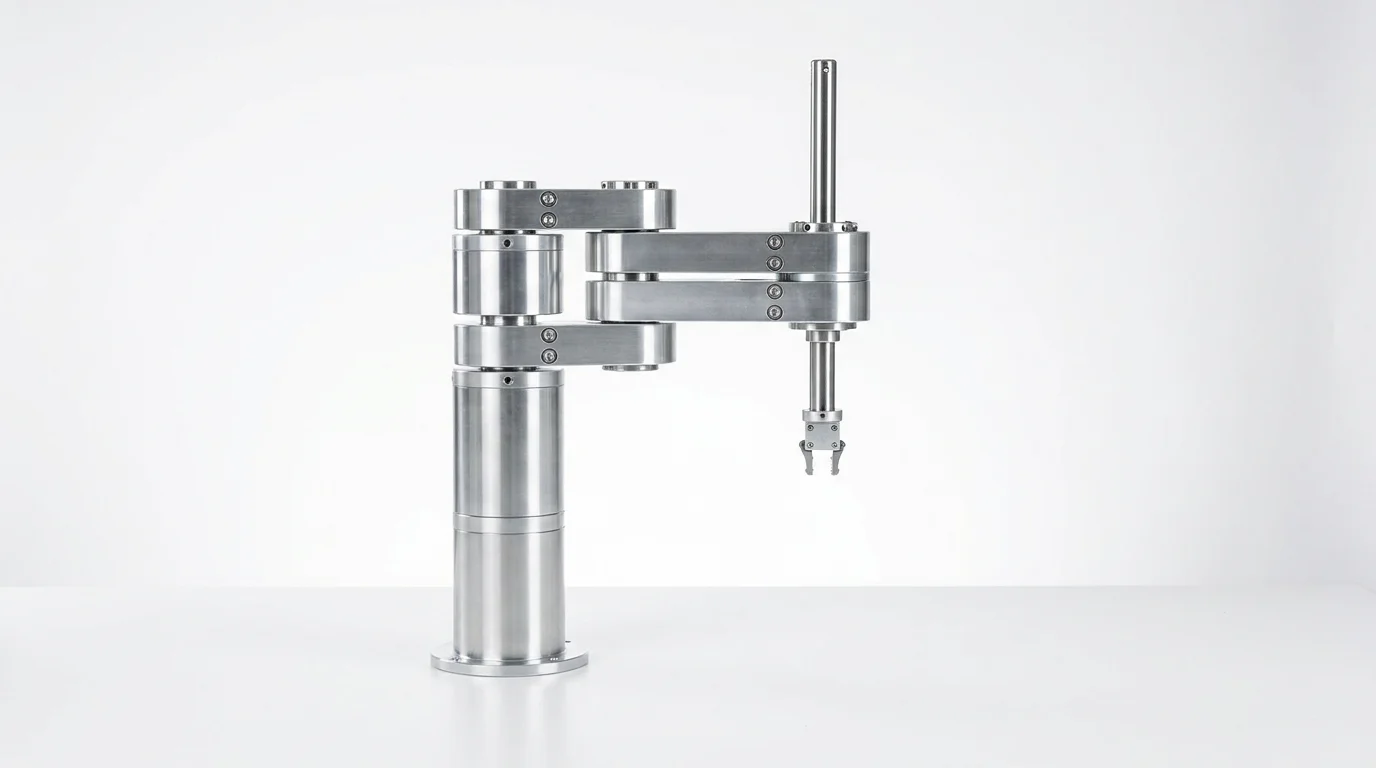
Technical illustration for Robot Joint Module Cost Breakdown: What You Are Really Paying For.
The Frameless Torque Motor and Electronics
Traditional motors are bulky and heavy. Modern joint modules use 'frameless' PMSM (Permanent Magnet Synchronous Motors) that are integrated directly into the housing. These motors are optimized for high torque at low speeds, reducing the burden on the gearbox. Coupled with this is the embedded servo drive. Shrinking a 400W industrial driver onto a PCB the size of a coin is a significant engineering feat. The cost includes high-grade MOSFETs, precision current sensors, and powerful microcontrollers capable of running Field Oriented Control (FOC) at 20kHz.
Dual Absolute Encoders and Safety Systems
High-end modules like our RHA series feature two encoders: one on the motor side for high-speed commutation and one on the output side for direct position sensing. This 'dual-loop' control compensates for any mechanical elasticity in the gearbox. Absolute encoders with 17-bit or 19-bit resolution are expensive optical or magnetic components. Furthermore, the inclusion of an electromagnetic holding brake adds complexity and cost but is essential for safety, preventing the robot from collapsing during a power failure.
Technical illustration for Robot Joint Module Cost Breakdown: What You Are Really Paying For.
The Value of Integration and R&D
When you buy a joint module, you are paying for the hundreds of hours of thermal modeling, structural analysis, and firmware development that went into the product. Designing a module that can dissipate heat efficiently while remaining compact is a major challenge. Additionally, the software value—compatibility with ROS2, EtherCAT, and CANopen—is often overlooked. A pre-integrated module saves an OEM months of development time, which translates to massive savings in 'time-to-market' costs.
Manufacturing Overhead and Quality Control
Finally, the price reflects the rigorous testing each unit undergoes. At PlaPivot, every module is subjected to a 24-hour burn-in test, accuracy verification on a laser interferometer, and thermal stress testing. Maintaining a clean-room environment for assembly and investing in high-end CNC equipment for the housings adds to the overhead but guarantees the reliability that industrial customers demand. Understanding these factors helps buyers make informed decisions between 'cheap' components and 'valuable' integrated solutions.
Ready to start your build?
Our engineering team is ready to help you select the perfect robot joint modules for your application. Get expert advice and a custom quotation within 24 hours.
Get a Quote & DatasheetRelated articles you might find useful: