The 'black box' of robotic hardware is opening up. A growing community of engineers and hobbyists is developing open-source robot joint modules, sharing CAD files, PCB designs, and control firmware. These projects are democratizing access to high-performance robotics and driving rapid innovation outside of traditional corporate labs.
The Philosophy of Open Hardware in Robotics
Open-source robotics is about more than just free software; it's about sharing the blueprints for the physical world. By making the design of a robot joint module open-source, creators allow others to study, modify, and improve the hardware. This collaborative approach leads to faster bug fixes, more diverse feature sets, and significantly lower costs. For researchers and startups, open-source modules provide a transparent platform where they can see exactly how the motor control loop is implemented or how the gear geometry was calculated, allowing them to customize the hardware for their specific needs without being locked into a proprietary ecosystem.
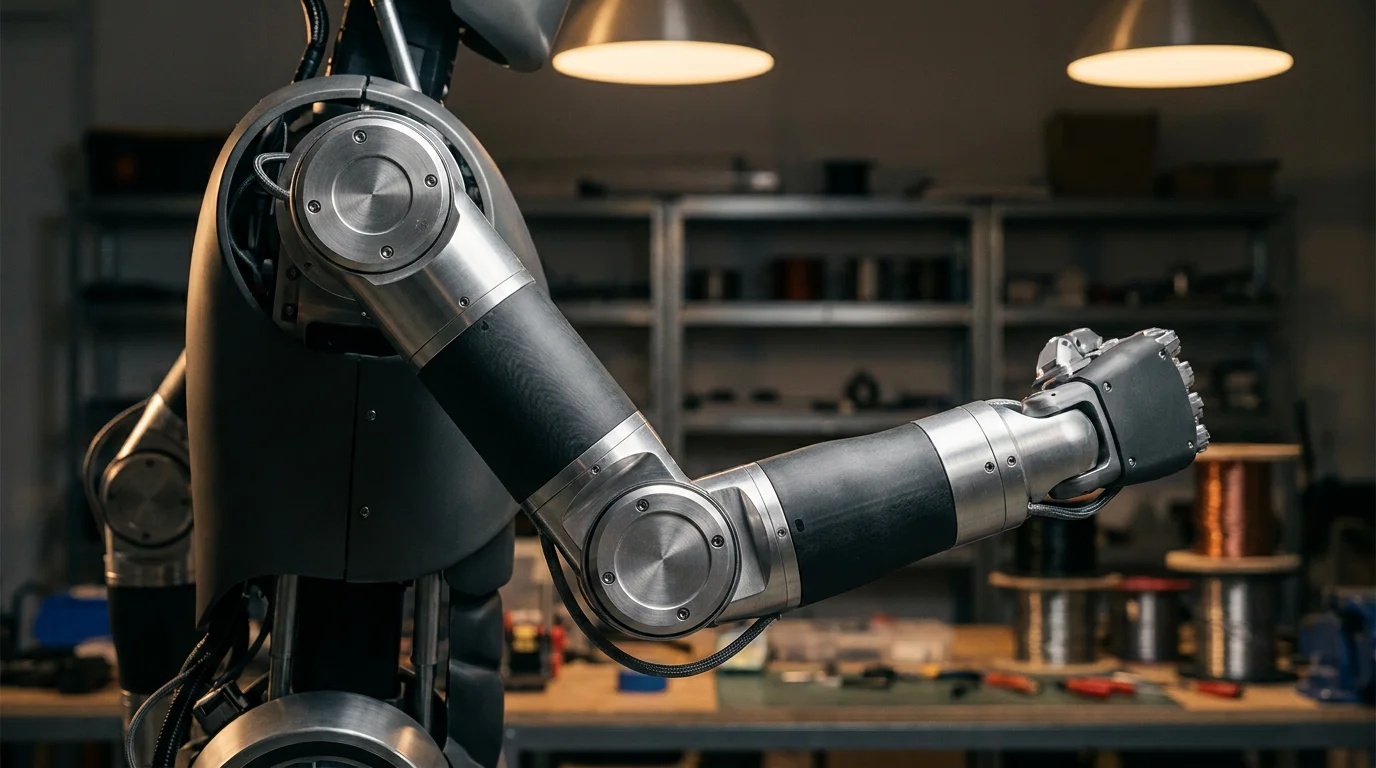
Technical illustration for Open-Source Robot Joint Modules: Community Projects and Hardware Designs.
Key Community Projects: From ODrive to SimpleFOC
Several projects have become cornerstones of the open-source actuator community. ODrive, for example, started as a way to use inexpensive brushless motors for high-performance robotics, providing a powerful open-source driver board. SimpleFOC is another massive project that provides an easy-to-use library for Field Oriented Control, making it accessible to anyone with an Arduino or ESP32. On the mechanical side, projects like the 'Open-Source Cycloidal Drive' provide 3D-printable designs that can be built for a fraction of the cost of an industrial unit. These projects are often hosted on platforms like GitHub and discussed in vibrant Discord or Reddit communities.
The Role of 3D Printing and Desktop Manufacturing
The rise of affordable, high-precision 3D printing has been a catalyst for open-source joint modules. Engineers can now iterate on gearbox designs in hours. While a 3D-printed plastic gear won't match the strength of a hardened steel harmonic drive, it is perfect for educational robots, light-duty prototypes, and 'proof of concept' models. Many open-source designs are 'hybrid,' using 3D-printed housings combined with standard off-the-shelf components like bearings, magnets, and brushless motors. This 'maker-friendly' approach allows a student or a small lab to build a functional 6-DOF robot arm for a few hundred dollars.
Technical illustration for Open-Source Robot Joint Modules: Community Projects and Hardware Designs.
Challenges: Precision, Durability, and Support
Building your own robot joint from an open-source design isn't without its challenges. Industrial-grade modules from companies like PlaPivot benefit from years of R&D, specialized manufacturing equipment, and rigorous testing. Open-source designs may struggle with long-term durability or consistency across multiple builds. Furthermore, when you use a proprietary module, you get a warranty and professional technical support. With open-source hardware, you are often your own support team, relying on community forums for help. For mission-critical industrial applications, the reliability of a commercial module usually outweighs the cost savings of a DIY approach.
The Future: Hybrid Ecosystems and Standardization
The future likely lies in a hybrid approach. We are seeing commercial manufacturers adopt open-source standards for their communication protocols and software APIs, making their 'closed' hardware easier to integrate into 'open' systems. Conversely, open-source projects are becoming more professional, with some offering pre-assembled and tested modules for sale. This cross-pollination is accelerating the development of standardized interfaces for robot joints, which will eventually make building a robot as easy as building a PC. Whether you are a hobbyist building a bot in your garage or an engineer designing the next industrial cobot, the open-source movement is providing the tools to innovate faster.
Ready to start your build?
Our engineering team is ready to help you select the perfect robot joint modules for your application. Get expert advice and a custom quotation within 24 hours.
Get a Quote & DatasheetRelated articles you might find useful: