A robot joint is only as good as its ability to stop. While the motor and gearbox handle the movement, the brake system handles the stability and safety. In integrated actuators, space is at a premium, making the design of the braking system a significant engineering challenge. This article explains the different types of brakes used in modern robot joints and why your choice of braking technology matters for your application's safety.
Holding Brakes vs. Dynamic Braking
Most robot joint modules use 'holding brakes.' These are designed to keep the joint in position when the power is turned off or when the robot is stationary. They are not intended to stop a high-speed movement (which is handled by the motor's 'dynamic braking' or regenerative braking). A holding brake works via friction; an electromagnetic coil holds a spring-loaded plate away from a friction disc. When power is cut, the spring snaps the plate shut, locking the motor shaft. This prevents the robot arm from falling under the weight of gravity.
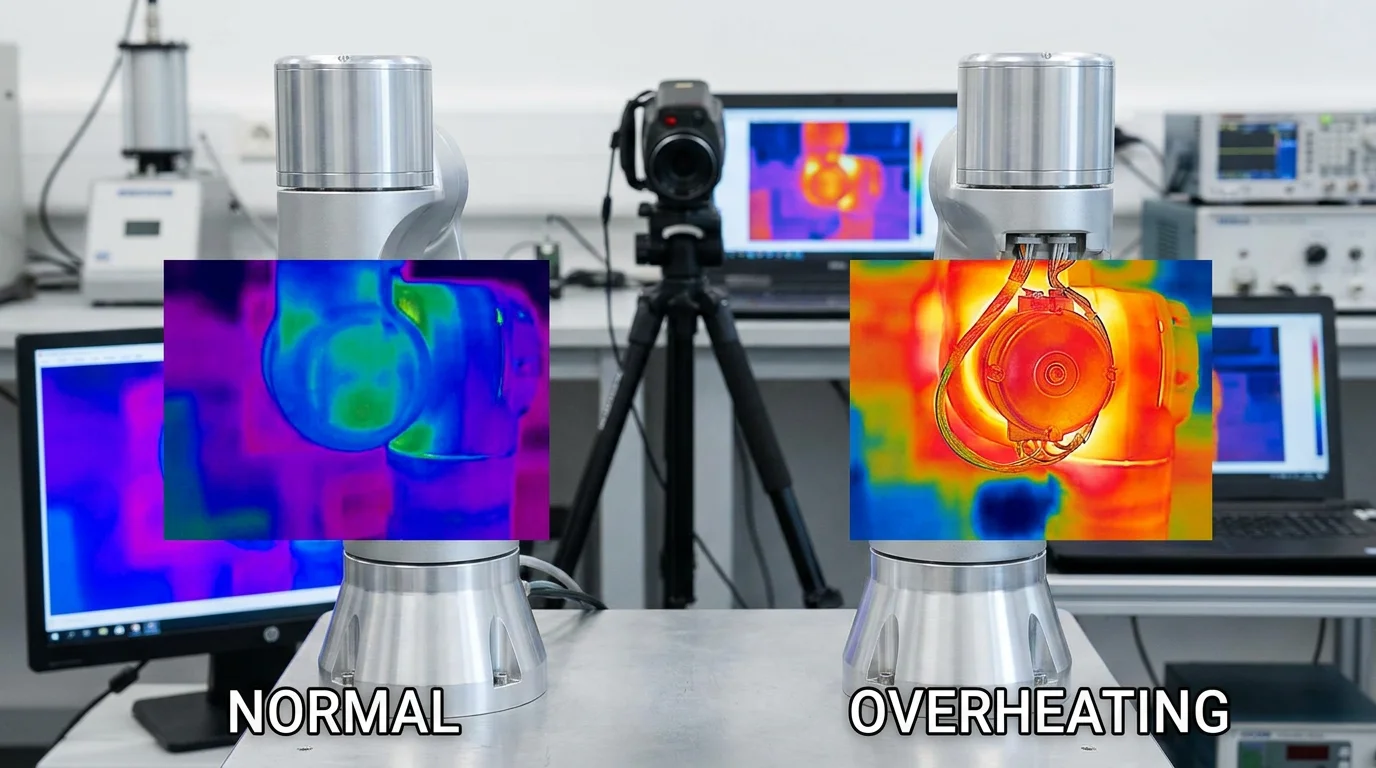
Technical illustration for Brake Systems in Robot Joint Modules: Holding Brakes vs Safety Brakes.
Electromagnetic vs. Permanent Magnet Brakes
There are two main technologies for these brakes. Electromagnetic brakes use a spring to apply force and a coil to release it. Permanent magnet brakes use a permanent magnet to apply the force and a coil to 'neutralize' that magnetic field to release it. Permanent magnet brakes generally offer higher torque in a smaller package and have zero backlash, making them ideal for the precision requirements of PlaPivot joint modules. However, they are more sensitive to temperature and require more precise voltage control.
Response Time and Safety Certification
In a safety-critical application, every millisecond counts. A brake that takes 100ms to engage might allow a heavy robot arm to drop several centimeters—enough to cause an injury. Our RHA series brakes are optimized for fast response times, typically engaging in less than 30ms. Furthermore, for robots working alongside humans, the brake system must be part of a 'Safe Torque Off' (STO) circuit, ensuring that the brake is applied even if the main control software fails.
Technical illustration for Brake Systems in Robot Joint Modules: Holding Brakes vs Safety Brakes.
Wear, Maintenance, and Lifespan
Because holding brakes are friction-based, they do technically wear out over time. However, in a properly controlled robot, the brake should only engage when the motor has already come to a near-stop. This 'static engagement' results in very little wear. Our brakes are rated for over 1 million cycles under normal operating conditions. We also incorporate a manual release mechanism in some models, allowing engineers to move the robot arm manually during setup or in the event of a total system failure.
Selecting the Right Brake for Your Joint
When selecting a joint module, check the 'Static Holding Torque' of the brake. It should be at least 150% of the maximum gravity-induced torque the joint will experience. For the base and shoulder of a large arm, we recommend our 'High-Torque Brake' option. For the wrist joints, a lighter, standard brake is usually sufficient. Understanding these specifications ensures that your robot remains safe, stable, and reliable, even when the power goes out.
Ready to start your build?
Our engineering team is ready to help you select the perfect robot joint modules for your application. Get expert advice and a custom quotation within 24 hours.
Get a Quote & DatasheetRelated articles you might find useful: