The heart of every robot joint module is its electric motor. While there are many types of motors available, two dominate the high-performance robotics landscape: BLDC (Brushless DC) and PMSM (Permanent Magnet Synchronous Motors). Though they look similar on the outside, their internal 'back-EMF' profiles and control requirements differ significantly, impacting the smoothness and efficiency of your robot.
1. BLDC Motors: The Trapezoidal Workhorse
Brushless DC motors are designed to be driven with trapezoidal current waveforms. They are simpler to control and generally more cost-effective. In a BLDC motor, the magnetic field is switched in discrete steps (often called 'six-step commutation'). This is great for high-speed applications like drone motors or power tools where absolute motion smoothness is not the primary concern. However, in the slow, high-torque world of robot joints, this 'stepped' switching can cause 'torque ripple'—tiny fluctuations in force that feel like a subtle vibration. For basic AGVs or simple robotic arms, BLDC-based modules are often sufficient, but for precision tasks, they can sometimes lack the 'silky' feel of a PMSM. BLDC motors also tend to have slightly higher acoustic noise due to the sharper current transitions.
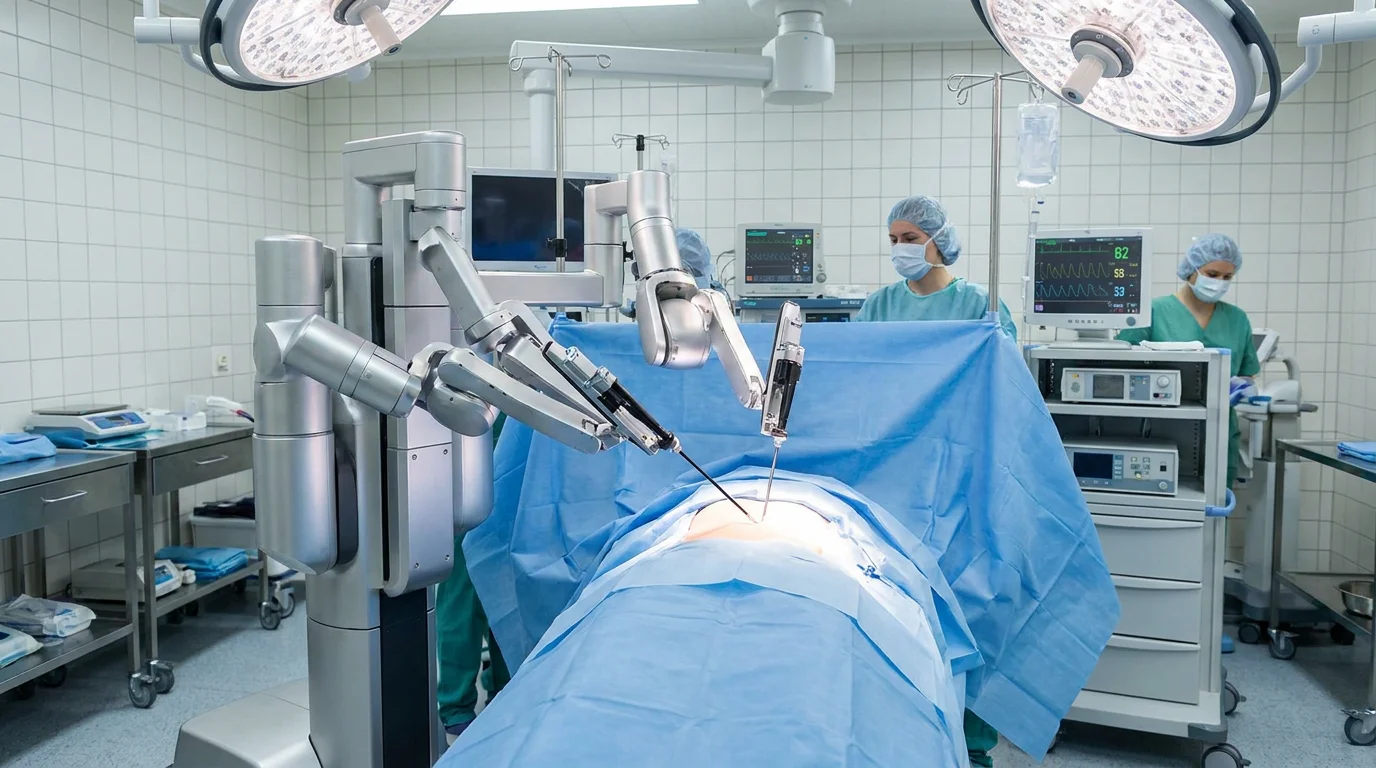
Figure: Technical implementation of PMSM vs BLDC: Choosing the Right Motor for Your Robot Joint Module. High-precision components for reliable robotic motion.
2. PMSM Motors: Sinusoidal Perfection
Permanent Magnet Synchronous Motors are the 'refined' cousins of the BLDC. They are designed to be driven with pure sine waves. This requires a more sophisticated servo driver and a high-resolution encoder to track the exact position of the rotor with extreme accuracy. The result is 'Sinusoidal Commutation,' which virtually eliminates torque ripple. A PMSM-driven joint module moves with incredible smoothness, even at speeds as low as 0.1 RPM. This is why PlaPivot uses PMSM technology in all our PP-series modules. It's the only way to achieve the 'force-sensing' and 'hand-guiding' capabilities that modern collaborative robots require. The smooth magnetic field transition also reduces mechanical vibration and extends the lifespan of the gear reducer.
3. Torque Density and Thermal Efficiency
When comparing the two, PMSM motors generally offer higher 'torque density.' Because the magnetic field is always perfectly aligned with the windings through Field Oriented Control (FOC), less energy is wasted as heat. In a sealed robot joint where cooling is limited, this efficiency is vital. A PMSM motor can often produce 10-15% more continuous torque than a BLDC motor of the same size before reaching its thermal limit. For an engineer building a compact robot arm, this means you can use a smaller, lighter joint module to achieve the same payload capacity, which has a ripple effect on the efficiency of the entire system. Better efficiency also means less 'derating' is required during long periods of continuous operation.
Figure: Technical implementation of PMSM vs BLDC: Choosing the Right Motor for Your Robot Joint Module. High-precision components for reliable robotic motion.
4. Field Oriented Control (FOC) Explained
The 'secret' to PMSM performance is Field Oriented Control (FOC). This advanced algorithm decomposes the motor's three-phase currents into two orthogonal components: one that generates torque and one that generates magnetic flux. By controlling these independently, the driver can maximize torque efficiency across the entire speed range. FOC requires significant computational power and high-speed current sensing, which is why integrated joint modules are so valuable—they handle all this complexity on an internal dedicated processor. At PlaPivot, our integrated drivers run FOC loops at 20kHz or higher, ensuring that the motor responds instantly to changes in load or speed with zero 'cogging' effect.
5. Final Verdict: Which One Should You Choose?
If you are building a low-cost hobbyist project or a system that only moves at high speeds, a BLDC-based actuator is a sensible, budget-friendly choice. However, if your application involves human-robot interaction, precision assembly, or slow, steady movements (like a camera gimbal or a surgical arm), the PMSM is the clear winner. The added complexity of the driver is a small price to pay for the dramatic increase in motion quality and efficiency. All PlaPivot integrated modules handle the PMSM control internally, so you get the benefits of sinusoidal motion without having to write the complex FOC algorithms yourself. Choosing PMSM is a commitment to the highest standard of robotic performance and user experience.
Ready to start your build?
Our engineering team is ready to help you select the perfect robot joint modules for your application. Get expert advice and a custom quotation within 24 hours.
Get a Quote & DatasheetRelated articles you might find useful: