Why This Matters Now
In 2026, the demand for humanoid robot joint actuators, exoskeleton joint modules, and quadruped robot actuators is exploding — driven by advances in AI-powered locomotion, billion-dollar investments in general-purpose humanoids, and a rapidly maturing medical exoskeleton market. But actuator selection for these applications is fundamentally different from traditional industrial robot arms. This guide covers what to look for and what to avoid.
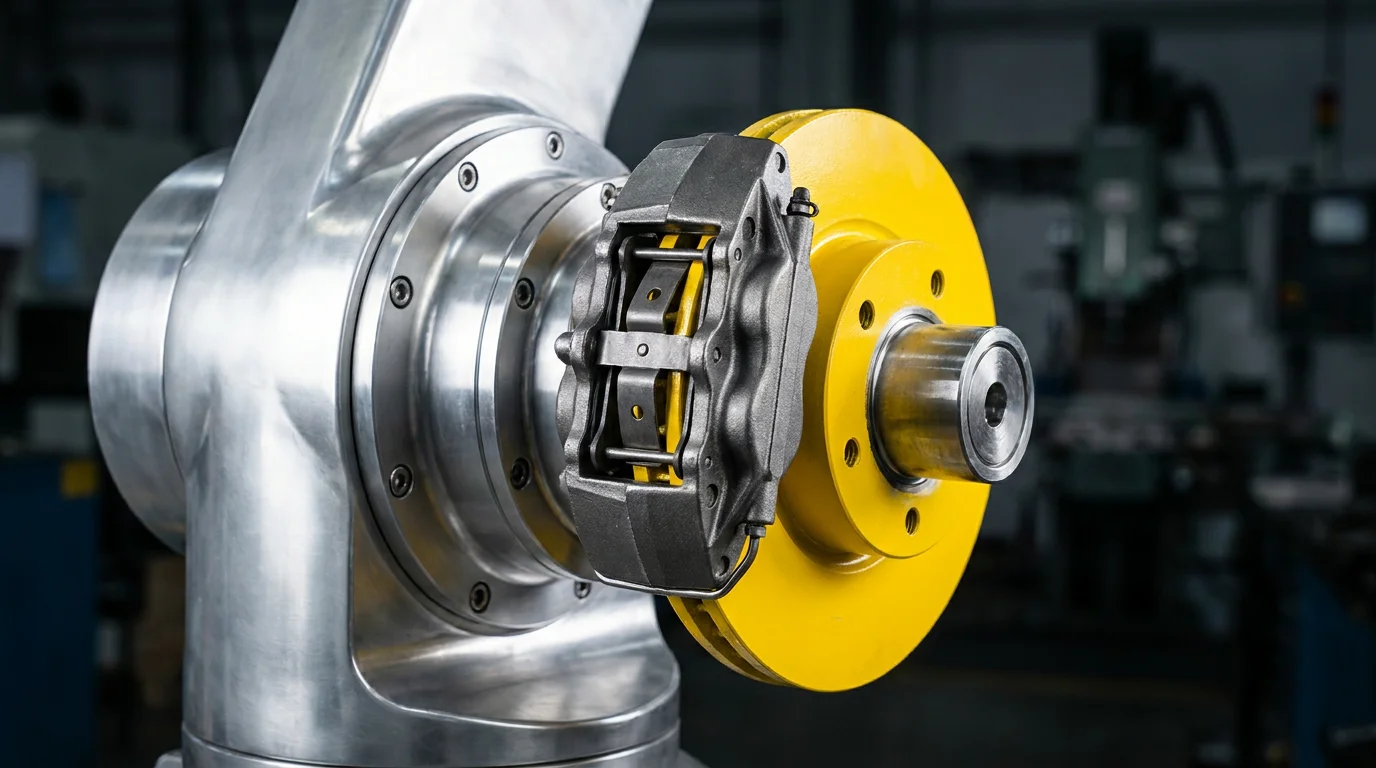
Humanoid robots demand compact, high-torque actuators that can handle dynamic loads and impacts.
1. Actuator Requirements by Application
Not all robotic joint actuator applications are created equal. The torque, speed, weight, and packaging constraints shift dramatically depending on whether you're building a bipedal humanoid, a rehabilitation exoskeleton, or a quadruped inspection robot.
| Application | Key Requirement | Torque Range | Critical Spec |
|---|---|---|---|
| Humanoid Robot (leg) | High torque density + impact resistance | 55–150 Nm (hip/knee) | Torque density >80 Nm/kg |
| Humanoid Robot (arm) | Compact, lightweight, hollow shaft | 6–30 Nm | Axial thickness <50mm |
| Powered Exoskeleton | Backdrivability, safety, low inertia | 15–55 Nm | Backdrive torque <1 Nm |
| Quadruped Robot | High bandwidth, impact-tolerant | 15–55 Nm (knee) | Control bandwidth >1 kHz |
| Medical Robot | Sterilization, sub-arc-min precision | 6–30 Nm | Backlash <0.5 arc-min |
| Surgical Robot | Absolute precision, zero vibration | 3–15 Nm | Encoder resolution ≥23-bit |
2. Humanoid Robot Joint Actuators: The New Battleground
General-purpose humanoid robots — from Tesla Optimus to Figure 02 to Unitree H1 — have between 28 and 52 degrees of freedom. Roughly 70% of those are rotary joints requiring integrated robot joint modules. For a bipedal robot standing 1.7m tall and weighing 60–80kg, the actuator map looks like this:
Lower Body (Locomotion)
- Hip pitch/roll: 90–150 Nm. These joints bear the robot's entire weight during single-leg stance plus dynamic ground reaction forces (2–3× body weight during walking). A high torque robot joint with harmonic drive is essential — planetary gear backlash would cause foot placement errors of 5–10mm per step.
- Knee: 55–90 Nm. Requires high backdrivability for compliant ground contact and shock absorption. Dual encoder feedback is critical for detecting foot-ground contact through torque sensing.
- Ankle: 15–30 Nm. Compact and lightweight — every gram here multiplies the hip actuator load during swing phase.
Upper Body (Manipulation)
- Shoulder: 30–55 Nm. Needs hollow shaft design for internal cable routing — external cables snag during complex arm trajectories.
- Elbow: 15–30 Nm. Compact form factor is critical; excessive axial length creates kinematic interference with the torso.
- Wrist: 6–15 Nm. Lightweight above all else — wrist mass directly limits end-effector payload capacity.
Humanoid Actuator Selection: PlaPivot Mapping
| Joint | Required Nm | PlaPivot Model | Weight |
|---|---|---|---|
| Hip Pitch/Roll | 90–150 Nm | PP-140S (90Nm) / PP-170S (150Nm) | 3.7–4.9 kg |
| Knee | 55–90 Nm | PP-120S (55Nm) / PP-140S (90Nm) | 2.4–3.7 kg |
| Ankle | 15–30 Nm | PP-085S (15Nm) / PP-100S (30Nm) | 1.1–1.6 kg |
| Shoulder | 30–55 Nm | PP-100S (30Nm) / PP-120S (55Nm) | 1.6–2.4 kg |
| Elbow | 15–30 Nm | PP-085S (15Nm) / PP-100S (30Nm) | 1.1–1.6 kg |
| Wrist | 6–15 Nm | PP-065S (6Nm) / PP-085S (15Nm) | 0.7–1.1 kg |
Medical exoskeletons require ultra-thin, lightweight joint modules with redundant safety features.
3. Exoskeleton Joint Modules: Safety and Compliance First
Exoskeleton joint modules operate under fundamentally different constraints than industrial actuators. An industrial robot joint that overshoots its commanded position by 0.1mm causes a rejected part. An exoskeleton joint that overshoots by the same amount can injure a human wearer.
What Makes a Good Exoskeleton Actuator?
- Backdrivability: The wearer must be able to move the joint freely when the motor is unpowered. Backdrive torque should be under 1 Nm — ideally under 0.5 Nm. Harmonic drives, despite their high reduction ratio, offer excellent backdrivability due to their low-friction flexspline design. Planetary gears typically lock up at high ratios.
- Torque sensing: The actuator must measure output torque in real time (not just motor current) to detect user intent. Dual encoder systems enable this — the twist between motor-side and output-side encoders correlates directly with transmitted torque.
- Smoothness at low speed: Human gait cycles involve joint velocities as low as 1–2 RPM during stance phase. Cogging torque (common in slotted BLDC motors) creates perceptible vibration at these speeds. Frameless slotless motors — standard in PlaPivot modules — eliminate this.
- Weight: Every kilogram on a hip exoskeleton increases the metabolic cost of walking by approximately 3–5%. Lightweight designs using thin-section harmonic drives and integrated electronics are non-negotiable.
Medical vs Industrial Exoskeletons
| Parameter | Medical Exoskeleton (Rehab) | Industrial Exoskeleton (Support) |
|---|---|---|
| Torque at hip/knee | 15–30 Nm (assistive) | 30–55 Nm (load-bearing) |
| Control mode | Position + impedance | Torque assist + gravity compensation |
| Safety standard | IEC 60601-1 (medical electrical) | ISO 13482 (personal care robots) |
| Cleanability | IP65 minimum; disinfectant-resistant seals | IP54 sufficient |
| Noise | <45 dB (clinical setting) | <55 dB (factory floor) |
Quadruped knee actuators must survive repeated high-impact landings while maintaining positional accuracy.
4. Quadruped Robot Actuators: Speed Meets Impact
Quadruped robot actuators face the most demanding dynamic requirements of any legged robot application. A Boston Dynamics Spot-class robot running at 1.6 m/s subjects its knee joints to impact forces exceeding 4× body weight at foot strike — with control bandwidth requirements above 1 kHz to stabilize the leg within a single gait cycle.
Key requirements for quadruped actuators:
- High control bandwidth: The servo loop must respond to impact within 1ms. EtherCAT communication (100µs cycle time) is mandatory; CANopen (1ms minimum cycle) is too slow for high-speed quadrupeds.
- Impact tolerance: The harmonic drive flexspline must survive repeated shock loading. PlaPivot modules are rated for 150% peak torque for up to 2 seconds — covering the transient spike during foot strike.
- Thermal management: Quadruped actuators run at high duty cycles during trotting and running. The integrated housing must dissipate heat effectively — aluminum alloy with integrated fins is standard.
5. Collaborative Robots: The Established Market
While humanoids and exoskeletons grab headlines, collaborative robot joint modules remain the largest and most mature market for integrated actuators. Cobots from Universal Robots, Franka Emika, and Doosan Robotics all use harmonic drive cobot actuator modules — but they typically manufacture joints in-house or buy from captive suppliers.
For smaller cobot manufacturers and system integrators, the equation is different. Buying off-the-shelf robotic arm actuator modules from a third-party supplier like PlaPivot means:
- Access to the same harmonic drive technology as Tier-1 cobot OEMs
- No multi-million dollar investment in joint assembly lines
- Supply chain flexibility — swap torque ratings without redesigning housings
- Faster iteration: test a 30Nm joint, switch to 55Nm if payload requirements change
6. Industrial Automation: The Workhorse Market
Industrial automation robot joints for traditional 6-axis arms, SCARA robots, and palletizing systems prioritize reliability and longevity above all else. These modular robotic joints run 16–24 hours per day in factories — a failure means a stopped production line costing thousands per hour.
For industrial applications, the key differentiator is lifetime testing data. Insist on L10 bearing life ratings (the point at which 10% of units are expected to fail) of at least 10,000 hours at rated torque. PlaPivot provides lifetime data for all six PP-series models — verified by accelerated life testing at 150% rated load.
The PP-52L module weighs just 0.23 kg with 52 mm diameter — ideal for humanoid finger and wrist joints.
7. Compact Robot Actuator Modules for Space-Constrained Designs
Across all these applications, one trend is universal: actuators must get smaller. A compact robot actuator module enables thinner robot arms, lighter exoskeletons, and humanoid designs that don't look like industrial equipment.
The three dimensions that matter most:
- Axial thickness: The distance from input flange to output flange. PlaPivot PP-065S: 42mm — thin enough to fit inside a prosthetic hand wrist.
- Outer diameter: Determines the robot arm's profile. Must accommodate internal cable routing (hollow shaft).
- Weight: Directly impacts the torque required by upstream joints — a cascading effect. Cutting 200g from a wrist module can reduce the shoulder module requirement by 2–3 Nm.
Building a Humanoid, Exoskeleton, or Cobot?
We'll help you select the right actuator modules for your specific application. CAD models, torque curves, and datasheets included with every inquiry.
Get Application-Specific Quote